Panel 5

Vestibulum purus. Duis nec odio. Praesent sed nulla ac nibh luctus bibendum. Pellentesque fringilla, leo et rhoncus porta, turpis nulla sollicitudin ligula, et varius ipsum lectus eget ligula. Donec diam.

Read more...

Panel 1

Maecenas placerat lacus sed lectus. Quisque lorem tortor, gravida sit amet, ornare a, interdum id, urna. Suspendisse massa est, dictum eu, vestibulum et, ultricies id, dolor. Vivamus turpis est, auctor et, imperdiet tincidunt, sodales vel, nisl. In hac habitasse platea dictumst. Nunc ligula. Integer tincidunt nibh eget lacus. Proin porta sem ac turpis. Mauris iaculis enim id neque.

Read more...

A Test Panel Thingy

It's quite a lot of trouble editing this. Could be more than it's worth.

Read more...

Panel 3

Lorem ipsum dolor sit amet, consectetuer adipiscing elit. Vivamus porta tortor sed metus. Nam pretium. Sed tempor. Integer ullamcorper, odio quis porttitor sagittis, nisl erat tincidunt massa, eu eleifend eros nibh sollicitudin est.

Read more...

Panel 4

Lorem ipsum dolor sit amet, consectetuer adipiscing elit. Vivamus porta tortor sed metus. Nam pretium. Sed tempor. Integer ullamcorper, odio quis porttitor sagittis, nisl erat tincidunt massa, eu eleifend eros nibh sollicitudin est. Nulla dignissim. Mauris sollicitudin, arcu id sagittis placerat.

Read more...

Panel 5

Vestibulum purus. Duis nec odio. Praesent sed nulla ac nibh luctus bibendum. Pellentesque fringilla, leo et rhoncus porta, turpis nulla sollicitudin ligula, et varius ipsum lectus eget ligula. Donec diam.

Read more...

Sunday, May 06, 2007

Spiderman 3

The Spiderman movies are great fun, with fleshed-out characters and exciting CGI. However the more I think about it, the more I feel it may have worked even better as a TV series, in the way that Heroes, Lost and Battlestar Galactica have succeeded in bringing big-budget ideas to the small screen.

Don’t get me wrong, Spiderman 3 is a great view, and ensures the franchise remains the best of the recent superhero film outings. But at almost three hours long, and with multiple story arcs and character developments, it’s left me wondering whether cinema is the right medium for superheroes. Certainly the special effects look good; but in the modern era of large plasma and LCD screens, they would look good in the lounge room as well.

Tobey MacGuire returns as Peter Parker, the self-described nerd who moonlights as New York’s friendly neighbourhood Spiderman. Life is good for Peter – Spiderman is universally popular; he’s doing well at college; and he’s still with the love of his life, Mary Jane (Kirsten Dunst). But as always, pride comes before a fall, and it’s not too long before Peter has to face an old enemy in the shape of his friend Harry – who returns to avenge his father’s death from movie one, having taken over the role of the “Green Goblin” – and a new one, in the shape-shifting form of Flint Marko, aka “The Sandman”, a petty crook who accidentally gets zapped by a de-molecularisation machine (as you do), and can now turn his body into sand. Thrown into the mix is an alien symbiot called Venom - a parasite which first infects Peter (becoming “Black-Suited Spiderman”), before taking over the body of Eddie Brock’s – Peter’s new rival photographer – when Spiderman rejects it.

Confused? We also have Gwen Stacy (Bryce Dallas Howard), the Chief of Police’s daughter who’s also a classmate of Peter’s and Eddie Brock’s girlfriend; J. Jonah Jameson (J.K. Simmonds), the newspaper editor and Peter’s boss who’s still trying to discredit Spiderman; and let’s not forget Mary Jane herself, whose acting career has hit the skids but her superhero boyfriend seems too busy to bear. Oh yeah, and Aunt May (Rosemary Harris) is still around to dole out words of wisdom, and to try to put the breaks on Peter’s anger when they find out Uncle Ben’s real killer (from movie one), turns out to be someone different – someone who just happens to have strayed in front of a de-molecularisation machine….

With all these stories, Spiderman 3 needs to be 170 minutes long, and while the onscreen action barrels along, and the non-action pieces keep you interested, you do still feel it from time to time – hence my proposition that the Spiderman franchise could have worked well as a TV series, with time enough to explore. Another reason is that the movie changes tone several times – including a bizarre but hilarious screwball comedy routine that shows just how the Venom suit is affecting Peter Parker. Those who know a young person afflicted by “emo” disease will snigger at the fact that Peter seems to turn into one every time he dons the black suit.

The performances are solid, with MacGuire impleccably playing the nerd whose pride makes way for a big fall, and Dunst the conflicted and disillusioned actor. James Franco turns an amnesiac Harry into a wonderfully sympathetic character – a true hero by film’s end. The two new villains – Thomas Haden Church as Flint Marko/Sandman and Topher Grace as Eddie Brock/Venom – are both fantastic. And as always, geek favourite Bruce Campbell turns in another stellar cameo appearance.

The action sequences are extremely well done; but the CGI highlight is when the Marko, having been reduced to a pile of sand, first tries to gather himself back into human form to stand up, walk, and wrap his fingers around a locket containing a picture of his beloved daughter. It’s a very human moment in a completely constructed shot. There’s a bit of all-American bravado – but with Raimi, you can never quite tell how much of it is tongue-in-cheek. The end satisfactorily closes the first “trilogy” of Spiderman stories, but leaves it open enough to future films. Above all, it insists upon the redemptive power of forgiveness, something which Raimi probably feels in this day and age, which could all use a lot more.

Spiderman 3 then is another fine piece of superhero work; and while it will be a long time before superheroes fade from our cinema screens, it will be interesting to see how long it will be before more pop up on TV. “Look out! Here comes… ?”

Monday, April 23, 2007

300

It seems many cinema-goers and movie reviewers have been trying to read too much into 300. The film - based on Frank Miller's graphic novel of the same name - is NOT an allegory about contemporary right-wing politics, nor is it an excessive demonisation of contemporary Iran. It is a big, somewhat silly, often gory, but beautifully shot popcorn movie. Those who think otherwise are simply thinking too much. Sure, it's not one to take Granny to, but if you're keen for big screen arse-whooping thrills and spills with plenty of spectacle and man muscle on display, then this is the flick for you.

Leonidas was the legendary King of Sparta who led a heroic band of 300 elite soldiers against the mighty invading army of the Persian king Xerxes. Historically, Xerxes' had anything from 20, 000 to 5 million soldiers at his disposal at the Battle of Thermopylae. But Leonidas' stand -at a narrow passage known as the Hot Gates, alongside 300 highly-trained warriors - was enough to hold them off until reinforcements from the rest of Greece arrived to send the Persians packing.

First of all it must be said that criticising 300 for not being historically accurate is as useful as bagging Mad Max for not presenting a realistic view of the future.* Some academics don't even believe that the Battle of Thermopylae happened. It was supposed to be around 480BC after all, so it's not like we can watch the edited highlights. It's best to take this film as a version of the powerful legend of the 300, in itself simply a ripping good yarn about men standing together to fight off a would-be conqueror.

Like Sin City before it, 300 yet again attempts to recreate Frank Miller's comic-book style in feature film form. Readers of Miller's 300 tell me it's very accurate, but as someone who had never read the graphic novel, I was intrigued by the film-making style anyway. It's epic and bold, full of washed-out, almost sepia colours, slow and quick edits, and a focus on the superficial: the buff, gleaming bodies of the Spartans; the movement of air under the soldiers' capes and rain buffeting the coast; the clinking of the god-king Xerxes' elaborate jewellery; the spatters of blood as the oncoming Persians get repelled by the 300. It's a film that revels in its machismo, its chest-beating war cries - and makes no apology for it.

Scottish actor Gerard Butler plays Leonidas, and much fun has been made of the fact he seems to shout every line: "This. Is. SPARTA!". "SPARTANS!" etc. He's a solid male lead, but let's face it, this movie is not about the plot, or the characters', or the dialogue. It's a war movie, and everything is presented in as simple a way possible - from the opening explanation of how Spartan boys are trained to become warriors, to the mechanics of the battle, and the Queen Leonidas leaves at home (Lena Headey), who must convince a sceptical city-state to send reinforcements to the Hot Gates, while dealing with one of Leonidas' more slippery advisers (Dominic West). The performances (including a surprisingly buff David Wenham as Leonidas' trusty friend and the narrator of the story) are as good as you would expect from actors working against a green screen with very little built environment.

This is a film all about images - and the digital effects are breath-taking in some sequences. The battle scenes are gory, but the fighting is choreographed like a ballet, in another tribute to the physicality of the soldiers. The god-king Xerxes (Rodrigo Santoro) arrives in a wonderfully over-the-top chariot, borne on the shoulders of hundreds of his slaves. He's at least 2.5 metres tall, and is dressed like Boy George after an accident with a piercing gun. He promises riches and power (and a fair few nearly naked women) to those who would join him; the steadfast and righteous Leonidas is stinging in his eventual rebuke. There's also battle elephants, rhinos, ninjas, grenades and a parade of psychopathically violent freaks thrown in to take on the Spartans. That's when you know historical accuracy really doesn't matter much in this version of events.
300 is certainly not the best historical action film ever made, but it is an interesting visual experiment and experience, and a big silly beat-em-up movie when right beats might - and should be enjoyed as such.

*And as far as historical anachronisms and inaccuracy go, let's look no further than last year's Marie Antoinette, which played hard and fast with recorded events, not to mention gaily throwing in contemporary references. While it received its share of negative press, it was nowhere near the level that 300 has encountered. May one venture to suggest that the film critics' darling Sofia Coppola directing may have had something to do with that? Meow - saucer of milk to the blogger!

Saturday, April 14, 2007

Reign Over Me

It is a truth, universally acknowledged, that comedians who become famous in comedy movies will eventually want to do dramas. Jerry Lewis, Eddie Murphy, Jim Carrey - you know what they say about the "funny" man who's crying on the inside.

The latest comedian to stretch his dramatic chops is Adam Sandler, best known previously for playing rather "simple" characters in such teen-friendly comedies as Billy Madison, The Waterboy, Big Daddy and Little Nicky. (Although I must admit to being a long-time fan of the aggro golfing movie, Happy Gilmore). His last film, Click, attempted some drama, but that fell somewhat flat with audiences, who were expecting Sandler's character to spend the whole 90 minute running time using his powerful remote control to freeze-frame jogging women so he could ogle their heaving bosoms. That's what the advertising suggested, anyway.

Reign Over Me appears to have learned a lesson from Click, and has been marketed as a drama from day one. It's a step in the direction of drama for Sandler, but there's still too much inadvertent "funny-ness"to really hit home as a serious piece. It also suffers from being far too long, having yet another tedious support role for a woman, and for giving equal weight to the story of the other main character, played by Don Cheadle.

Sandler plays Charlie Fineman, a former dentist whose wife and three daughters died in one of the planes that hit the World Trade Centre on September 11, 2001. Faced with such an enormous trauma, Charlie's reaction was to switch off, quit work, never talk about his family, and even regress to a younger, pre-family version of himself. We enter Charlie's life through Don Cheadle's character Alan Johnson - and Charlie's former roommate at dental college. Alan has a loving family and a good practice, but an unfortunate habit of attracting crazy but beautiful female stalkers, and a growing mid-life crisis. His wife Janeane (Jada Pinkett-Smith in a cardboard cut-out "wifey" role) and two daughters are great, but he yearns for the lost freedom and silliness of his younger days, which he rediscovers through Charlie.

The main problem is a man approaching middle-age and feeling a bit of ennui in no way equals the tragedy of a man losing his entire family in the most infamous act of terrorism in recent times. Writer/director Mike Binder seems to have decided that telling a story solely from Charlie's perspective would be hard for the audience to relate to. Fair enough. But the focus on Alan and his family takes away from the magnitude of Charlie's situation. It also adds to the length of the film, which was always going to be long, because you can't just magically fix someone like Charlie, who's been out of his mind for a good five years. At 124 minutes, it isn't even that long, but it feels like it due to the numerous buddy scenes, which lead to psychologist scenes, which lead to courtroom scenes, and so on.

That's not to say there are no good moments: Cheadle is a great actor, and his performance here is testament to that; and Saffron Burrows - a rail thin former model - is surprisingly entertaining as his crazy stalker with problems of her own. Liv Tyler is a bit wide-eyed and vacant as psychologist Angela, but she conveys a good sense of understanding and caring. And Sandler himself has some nice little moments - especially the inevitable scene where he breaks through the fog and talks about his family and what happened to them for the first time. However he's incapable of escaping the raspy, sometimes slurry speaking style that so defines his "simple" characters from those movies listed above. It may be why a group of teenagers sitting up the back at my screening kept guffawing when really it wasn't the time or place. There certainly are moments of comedy, and Sandler has some funny lines, but there's a lot more going on with his character, and with the movie in general and tossing out gags doesn't seem to do it justice.

In summation - a solid attempt at a drama that's sold a bit short by trying to keep fans of Sandler's comedies happy. Let's not even get on to Jada Pinkett-Smith's role of the "good but nagging wife at home".... good to see Hollywood writing complex and intelligent roles for women, isn't it?

Thursday, April 12, 2007

The Lives of Others

Quite possibly the best film I've seen so far in 2007 (even though it was officially released last year), and thoroughly deserving of its Oscar for Best Foreign Film back in February, The Lives of Others (Das Leben der Anderen in its native German) is a beautifully written, expertly acted and wonderfully shot dramatic thriller, that marks a stunning debut from writer/director Florian Henckel von Donnersmarck.

The film is set in early 1980s East Berlin, with the secret police force known as the Stasi at the height of its powers. Almost everyone is either under surveillance, or informants. One of the Stasi's best spies is Gerd Wiesler (Ulrich Mühe), a man who can best be described as blank. Tall, thin, expressionless, dressed only in drab grey, Wiesler is a master inquisitor assigned to surveil prominent playwright Georg Dreymann (Sebastian Koch), and his actress girlfriend Christa-Maria Sieland (Martina Sedeck). Dreymann is actually one of the few writers loyal to the DDR, but when the Minister for Culture Bruno Hempf (Thomas Thieme) becomes interested in Christa, he orders Wiesler's boss Anton Grubitz (Ulrich Tukur) to dig up some dirt to get Dreymann out of the way.

The film follows Dreymann and Wiesler, one blissfully unaware of being watched, but increasingly concerned with the repression of life on his side of the wall; the other becoming, for the first time, interested and touched by the creative world his quarry inhabits. Wiesler's life is bland: his flat is the worst kind of Communist bloc chic; he fills his evenings with simple meals and visits from prostitutes. In contrast, Dreymann and Sieland's flat is full of love, warmth, music, books and, as it turns out, inevitable subterfuge. It's hard to talk in detail about too much more, as one of the joys of this film is watching the watcher, and the little things he does to change his own path as well as his subjects'.

The performances all round are wonderful - Ulrich Mühe in particular. His character seems to be made out of ice and steel. yet he manages to communicate the gradual softening of his heart with only his eyes - a tear on hearing Dreymann play a beautiful piece of Beethoven; a gentle look at a child while sharing an elevator ride. It sounds cheesy, but Mühe plays it so well - you really do end up cheering for this ostensibly "bad" guy, especially by film's end.

The Lives of Others is quite lenghty at 139 minutes, but even though its pacing is relatively slow, you're never bored. Each scene has its place, each line of dialogue has meaning and relevance, each shot has a purpose. Director von Donnersmarck understands how to build tension without the need for the big bang Hollywood special effects: he lets his camera linger over people's faces, bodies, grey skies, Trabant cars - everything. The overall effect of this technique is to create a true atmosphere: you get the sense of events unfolding over months; you get to intimately know the characters and therefore understand their motivations. They are not heroes, nor villains - they are simply everyday people living in a time made more extraordinary by its very ordinariness.

The Lives of Others is in limited cinema release, so grab a chance to see it on the big screen while you can. It's a rich moviegoing experience that will make you sad, happy, distraught, but overall inspired that their are filmmakers out there bringing beautiful stories like this to life.

Friday, April 06, 2007

Becoming Jane

Jane Austen novels - and the subsequent films and TV series based on those novels - are truly "porn for women". If a woman doesn't long for a tall, dark and handsome man to stare broodily at her but act like a stuck-up bastard before passionately and surprisinly declaring his undying love in the most perfect example of Regency language, well - she's obviously misplaced her second X chromosome.

With so much affection for Austen's witty examinations of late 18th/early 19th century manners and society, it was inevitable that one day a film and/or TV series would shift focus from her characters to her actual life. Becoming Jane is the result, and although it makes Austen's younger years considerably more exciting than they probably were, it reflects the author herself's work in being well-constructed, and endlessly charming.

Becoming Jane is actually based on a book called Becoming Jane Austen, which posed the theory that Jane - who was famously denied the happy-ever-after endings of her heroines, dying a spinster - once had an "understanding" (relationship probably being too strong a word) with an Irish lawyer named Tom LeFroy when both were 20 years old. LeFroy went on to be Governor of Ireland and named his daughter Jane. Enough proof for author ???, and the subsequent filmmakers, to sex up the story and claim Austen did have personal experience of matters of the heart, which she later drew on in her novels.

The first half of the film is simply hilarious. If you like a bit of 1795-era humour like me, you'll also be cracking up laughing as other cinema-goers wonder what the hell you're on. Anne Hathaway is, in true Hollywood style, far prettier than Austen was (remember Greer Garson as Marie Curie? Female chemists have been living with that legacy for years), but she works her American tongue well over the sparkling English dialogue. She's matched by the devlish charms of James "I'm in every second movie now" McAvoy as LeFroy, a roguish pugilist who lives by the good graces of his rich judge uncle (Ian Richardson). Their initial dislike predictably turns into an attraction, then an alliance, before crumbling under the weight of personal responsibility.

Where this movie falls down is in its second half, with the road towards the unhappy ending unfortunately pitted with melodramatic potholes. The cast of British stalwarts - including Richardson and the indomitable Maggie Smith as a Lady Catherine de Burgh-matriarch - seem wasted in one-dimensional roles. Julie Walters is great, but her performance could be swapped with Brenda Blethyn in last year's Pride and Prejudice and nobody would notice. And while it has moments that inspire you to clasp your hands to your chest and sigh, such as LeFroy's inevitable declaration of love for Jane, the characters are not quite as dynamic as the ones Austen herself created. An irony really, but real life is never quite as interesting as fiction.

If anything, this movie's a potent reminder of just how lucky we Western gals are these days. Sure, wearing empire-line muslin gowns and going to country balls looks appealing, but the corseted nature of not just women's bodies but their freedoms and desires certainly doesn't. It's a good movie to see with your girlfriends, or your Mum. I would also recommend it to men if they want to score points with their ladies.

As a final note, I'd just like to point out the ridiculousness of drawing comparisons (as many other reviews have done) between the character of LeFroy and Mr Darcy from Pride and Prejudice. LeFroy is more like a Wickham or a Willoughby (from Sense & Sensibility) than a Darcy, which shows perhaps where Jane's own preferences lay, or at least why her characters end up rejecting lively roustabouts in favour of the broody but honourable types. Now that I've made that point, I'm off to buy my partner a frock coat and a cravat, and convince him to spend several hours staring broodily out a window.

Sunday, March 25, 2007

Hot Fuzz

If you've never heard of Simon Pegg and Nick Frost, chances are you're not a twenty-to-thirty something geek. The pair - along with writer/director Edgar Frost - are the current wunderkids of cult British comedy. Their style of playing straight for the biggest laughs began with the TV sketch show Big Train (which this reviewer is still trying to track down on DVD), continued with the freaky-geeky sitcom Spaced, and reached international fame with rom-com-zom Shaun of the Dead, a loving parody of zombie films, told from the point of view of your average, ordinary computer nerd just trying to get to the safety of his local pub.

The trio's follow up is Hot Fuzz, another loving tribute, this time to small-town English murder-mysteries (ala Agatha Christie), but more particularly to Hollywood cop buddy films, such as Point Break and Bad Boys (heavily and hysterically referenced in the film). Pegg plays Nicholas Angel, a brilliant and highly-trained young police constable sent packing from London because his skills are showing up the rest of the squad. All of a sudden he finds himself a sergeant in the middle of Sandford, the kind of quiet little village favoured by Tidy Town judges worldwide. In fact, Sandford is facing its annual Tidy Town evaluation when weird and gruesome accidents begin happening. It's up to Angel - and his new partner Danny Butterman (Frost) - to work out whether the accidents are just that - unlucky accidents - or something far more suspicious.

The premise of something sinister lurking behind the quaint village facade is hardly new, but it's the Shaun of the Dead formula of mixing absurdity with straight delivery, topped with a healthy measure of OTT violence that brings life and great laughs to the concept. Pegg and Frost are decent actors too, and they're buoyed by a who's who of British character actors - cameos by Bill Nighy and Steve Coogan, a wonderfully sad-eyed Jim Broadbent as the local police chief who wants a quiet life, and Timothy Dalton as a fantastically smarmy local businessman who always seems to be a step ahead of the police.

Central to the film is the relationship between the honest, upright superstar Angel, and the tubby, Cornetto-chomping Danny, who yearns for big-city action but experiences it only through his enormous collection of crap Hollywood blockbusters. Danny is the son of Broadbent's police chief Frank Butterman, so his story arc becomes more interesting as he learns some painful truths about the town, and is forced to make the required "tough choice".

The film is quite horrendously violent, with the "accidental" deaths coming about in increasingly brutal ways. After what could be legitimately called a slow beginning, the film's final 45 minutes is an orgy of violence in the best cinematic tradition. But for those on the squeamish side, it always remains video-game violence - realistic, but not real. There's plenty of blood, but the victims always get up again. It's a parody after all, and the constant references to famous action film sequences and jokes about the genre keep you laughing even when cringing. My only complaint would be the film's ending does suffer from a spot of the Peter Jacksons - in that it seems to have several endings. But again, they're parodying the genre, so it's hard to tell if that's a fault in the editing room or was planned all along.

Pegg, Frost and Wright say they try to make films that they themselves would want to watch. It's a simple theory, but it's amazing how often it seems to be forgotten in Hollywood. Let's hope Britain realises what geniuses they have in the trio, and prevent them being lured away by the bright lights of Tinseltown. It won't be to everyone's taste, but if you're a comedy fan, Hot Fuzz is a joy.

Note! Cate Blanchett actually has an uncredited cameo role in Hot Fuzz, which just proves how similar Australian and British comic sensibilities are. See if you can spot her!

Sunday, March 18, 2007

The Heartbreak Kid

Gawd, what is it with female teachers fancying their male students? What on earth can possibly be attractive about a 17-year-old boy - apart from those things that perhaps, a 15-year-old girl might find intriguing? It certainly confuses me - having seen Notes on a Scandal and now the Brisbane Arts Theatre's production of The Heartbreak Kid ( the first show of their 2007 "Early Week" series), I'm still none the wiser. However, I can say this is a decent production, and worth a look if you like Australian plays. Richard Barrett's cultural coming-of-age story is probably best known as the Australian film starring Claudia Karvan and Alex Dimitriades. Having never seen the film, nor the TV spin-off show Heartbreak High, or even a previous production of the play, I'm in no position to provide comparisons - which could be fortunate or unfortunate, depending on where you're coming from.

The Heartbreak Kid tells the story of Nicky (Keil Gailer), a 17-year-old boy of Greek heritage, who develops a crush on his new teacher, Christine "Papa" Papadoupolis (Belle Reid) at an inner-Sydney high school. Papa is only young herself (22 or 23), and seems to appreciate Nicky's fine form, especially when he's playing soccer. But as a teacher, any kind of relationship is obviously out-of-bounds, so Papa has to cope with tutoring classes of unwilling students for their HSCs, all the while fending off Nicky's puppy dog advances and her own feelings. That's really about all of the plot I can tell you; not because I'd be giving the rest away, but because there really isn't that much else to talk about - there's no real subplot despite some promising starts with Nicky's parents having a lotto win and a subsequent fight he has with his friend Steve (Nick Trenthan) and cousin Con (a show-stealing Shayne Grieve), which never gets fully resolved.

Director Kat Kiorgaard has obviously relished the play's 80s setting. The costuming and soundtrack in particular are excellent, although I got the feeling that perhaps a little bit too much attention had been paid to the musical choices. The device of linking a song's lyrics to the scene just played was clever to begin with, but as the drama escalated, I felt it undermined some of the on-stage tension, particularly when some of the songs made the audience laugh. The play certainly had its light and humourous moments, but sometimes it felt like a comedy with bits of drama thrown in, rather than the other way around, which I believe was probably what the playwright intended. This was exacerbated by the stirling efforts of the supporting cast, who - though hilarious and well-acted - really were just comic relief. Only Daren King as Graham, Papa's concerned fellow teacher, brought any kind of gravitas to his role.

For the most part the pacing was consistent, although a scene in the first half where the boys get ready for a night out while listening to some hard rock went on for a bit too long, as did the subsequent scene in the nightclub. The set - fitting in as Early Week shows must with the Main House stage set-up - was very well used, and the lighting appropriate.

Without a doubt the best scenes were the moments between Papa and Nicky, as the young teacher struggles with her feelings and responsibilities, and the teenager puts on all the bravado his hormonally-supercharged body can muster. These are nice dramatic pieces - Reid and Gailer should be congratulated (although as one audience member told me afterwards: "They need to keep their volume up!").

The play aims to tackle the struggle immigrant Australian families face to "fit in" with the rest, and while there are cursory nods to this (Nicky and Con's attempt to get a school soccer team going, Papa has parents who want her to get married and have babies ASAP), they're never explored to the depth that might give greater understanding to the reasons why Nicky and Papa are attracted to each other. I believe the film goes into this in more detail; which would make sense, with film obviously having the luxury of time and space that theatre lacks.

Overall though, this is a well-told tale of misplaced feelings of love - even if I personally have no idea how such feelings could exist in the first place!

Production seen: Sunday 18 March
Running until 3rd April.
www.artstheatre.com.au

Sunday, March 11, 2007

Scoop

I am the first to admit I am a Woody Allen novice. I was born after Manhattan and Annie Hall, often regarded as his masterpieces. Fair enough, they very well may be – it’s just I haven’t seen them. Nor have I seen Hannah and Her Sisters, Crimes and Misdemeanours, Husbands and Wives, nor any other films in his bulging back catalogue. The guy’s obviously prolific. But there’s an old adage that just because you can, doesn’t mean you should.

The first Woody Allen movie I sat the whole way through was last year’s Match Point, and that’s two hours of my life I sent packing straight to hell to rot forever. I abhorred the movie – I thought it was pretentious, badly-written, poorly-acted, full of plot holes and weak characters, and extremely sexist in its portrayal of women. Others hailed it as his return to form. Again, fair enough, given his output in the late 90s, perhaps it was. All I can judge is his latest efforts.

Scoop is Allen’s follow-up to Match Point, and like that film, it’s set in England. However, this one’s a comedy – although I declared Match Point to be laughable it was technically a dramatic thriller. Scarlett Johannsen (I’ll get to this perky pin-up later) plays Sandra Persky, a New York journalism student studying in London. She gets the scoop of a lifetime when the spirit of recently deceased investigative reporter Joe Strombel appears to her while she’s being “disappeared” as part of a magic show. She then enlists the help of the magician Sid Waterman to help her find out whether well-connected politician-to-be Peter Lyman (Hugh Jackman) is in fact a serial killer.

From the start this film is full of plot holes and terminally unfunny moments. The gag of the dead reporter sneaking off Death’s boat as it crosses the River Styx is cute, but it’s not enough to sustain the gag, especially once Strombel starts appearing wherever he likes, only to state half-way through the film that ‘Oh no! This is finally it!” when his usefulness as a plot device was obviously finished. Sandra’s burgeoning romance with the aristocratic Lyman is Mills & Boon unrealistic – she jumps in front of him wearing a swimsuit in all the right places and then bang, he’s falling for her. Sandra has all the verbal diarrehoea of Allen’s magician character (which is just Allen really). That helps to establish a bond between the two - especially after she starts telling Lyman he’s her father – but after a while is simply annoying. The movie tries to twist and turn to make its story make sense and have some sort of dramatic climax, but the timeline is all wrong, there’s a half-resolution three-quarters through the film and it just doesn’t stack up.

As for Hugh Jackman – why, dear God, why? It says something about the film when Hugh’s performance in the outrageously camp Van Helsing is more entertaining that this. He’s not terribly bad, he’s just given nothing to work with except a few well-cut suits and an accent that could melt butter. And melt butter it does, as Sandra, pretending to be someone else named Jade, falls further in love with the man she’s supposed to be spying on, who could in fact be a serial murderer. I honestly don’t get what everyone else seems to see in Scarlett Johannsen. Sure, she’s a looker, and harks back to the glamourous days of the 40s and 50s when full-lipped, full-hipped women could be movie stars. She was promising in Lost in Translation, boring in Match Point, absolutely woeful in The Black Dahlia, and little more than cute here in Scoop. There are worse actors out there, but I just don’t think we should be hailing her as the next Cate Blanchett just yet.

I began this review by stating my novice status in the world of Woody Allen. There are probably rules somewhere that state you can’t be a movie buff without having seen at least five of his “masterpiece” films. But all I can judge are the two movies of his I have seen, and I’m afraid they don’t leave me with much desire to go track down his other work. But if you do want to watch a Woody Allen comedy, may I suggest hiring out one of his older efforts, as at least you might get to see him firing on all channels, instead of the hit and miss affair that is Scoop.

Sunday, February 25, 2007

Same Time Next Year

The Brisbane Arts Theatre had a coup for the start of its 2007 season: the premiere performance of noted Australian playwright Jill Shearer's latest work Candi Bentar. Unfortunately this reviewer was not able to catch that show, but other reviews were certainly favourable (you can read what Stagediary had to say here).

As tragedy often follows triumph, I would not have been surprised for the second show of the year to be a disappointment. However the Bernard Slade-penned Same Time Next Year is a sweet little production, which while a little dated and certainly not ground-breaking, contains fine performances from its two leads, and is a pleasant diversion on a Saturday night.

Can you love two people at the same time? For George and Doris, the answer is yes. The two are relatively happily married - to different people - when they meet and have a one-night stand in 1951. That one weekend turns into 25 years of weekends, always at the same time of the year, and at the same San Francisco hotel. Their relationship seems to be the one constant thing in a world full of rapid and often confusing change.

"Double handers" - shows with only two actors - are tough, and David McCartney as George and Andrea Carne as Doris do well to sustain their performances. Their American accents did waver towards the end of the show, but that's only to be expected after two hours. However both must be admired for capturing the nuances of their characters - George's youthful brashness turns into grief-stricken conservatism, and finally analytical self-acceptance; while Doris' growing confidence is a joy to watch as the young housewife and mother decides to get herself an education, embrace the revolutionary spirit of the 60s, then move into the business world and become her family's main breadwinner. At times the sexual intimacy between the two seemed somewhat forced, but the did get across the sense of deep friendship that obviously is what kept George and Doris coming back to each other every year.

Dale Murison's direction is strong, although I do feel the script could have been cut back at times to prevent some scenes from lagging. There's a few American-isms that go over the head, but that's only to be expected from a script that ends in 1975. The use of the maid (Cathy Marshall) cleaning up the room between scenes was a neat device allowing the actors to change costumes, but sometimes it went on too long. However, to not have the actors change would be a disservice to Robyn Edwards' excellent wardrobe design.

Along with murder-mysteries, Terry Pratchett adaptations and farce comedies, Brisbane's oldest community theatre specialises in gentle relationship dramas like Same Time Next Year, and this is certainly a decent show. However I hope the Arts continues to run newer and more adventurous shows alongside its trusty stables, in order to increase its audience base into the future.
Performance seen: Saturday 24 March.
Season runs until March 31.
Book on 3369 2344.

Tuesday, February 20, 2007

Notes on a Scandal

Dame Judi Dench is famous for never watching her own performances on film (with the exception of the James Bond franchise, in which in recent years she has played spy boss M). She claims she dislikes seeing herself on the big screen, and with Notes On a Scandal, I can certainly understand why. Her character is not flattered in any way by the camera – she is all wrinkled skin, thinning hair and narrow eyes. But it’s a shame Dame Judi can’t appreciate what the rest of us do – her magnificent ability to morph into a character and give a performance rich in emotion, depth and sheer bravura.

Dench plays Barbara, a lonely 60-something teacher at an inner-London school. She despises her students, loathes her fellow tutors and writes obsessively about the minute goings-on in her life in her diary. She also has a predilection for picking young females to be her “special friends”, and in this case, it’s fragile art teacher Sheba (Cate Blancett) who catches her eye. Sheba has an imperfect but loving home life, but risks it all when she embarks on an affair with 15-year-old pupil Stephen (Andrew Simpson). Witnessing an illicit encounter, Barbara is initially shocked by Sheba’s behaviour, but soon realises she could twist the situation to her advantage, in order to bind Sheba to her forever.

Notes on a Scandal is an examination of two women who could both be labelled sexual predators, albeit very different types. Dench is a powerhouse as the manipulative Barbara, who has become so embittered by years of desperate solitude that she is incapable of forming natural relationships, relying instead upon lies and manipulations. Watching Barbara gradually encroach on Sheba’s home life in an attempt to isolate her from family members is like watching a lion stalking a confused baby gazelle. However, unlike serial killer-type films, Barbara never loses the essence of humanity, and it’s a tribute to Dench that she can play such a despicable character but keep in touch with what it’s like for society’s outsiders: those left without hope and without love.

Blanchett - as always - gives a wonderful performance as Sheba, the free spirit mother-of-two who embarks on a torrid fling with a student out of a longing to feel young and unburdened by family (her mother is disparaging of her abilities, her husband is 20 years older than her, and their son has Down’s Syndrome). She knows it’s wrong, but persists, helped along by the eagerness of the teenager involved (good work by newcomer Simpson). The rest of the supporting cast is strong, particularly Bill Nighy as Sheba’s distant but loving husband. It’s hard to feel sympathetic for her, considering she brings the drama on herself, but Blanchett plays Sheba’s flaws honestly.

There’s a couple of script problems, mostly to do with the timeline of events, and the quick way Sheba’s family turns on Barbara after laughing with her over lunch just a few scenes earlier. The soundtrack by Philip Glass lifts the tragedy of these everyday lives to an epic scale, though truth be told it’s often distracting and far too loud. It over-compensates for action when in fact silence may have been better. The final scene is appropriate, if somewhat clichéd.

Dench is truly outstanding in this film, and certainly deserves an Oscar, even though she’s likely to be pipped on the night by rival knight Dame Helen Mirren (in The Queen). She’s ably supported here by Blanchett, who unfortunately will be overlooked as the Best Supporting gong will undoubtedly go to popular newcomer Jennifer Hudson for her breakthrough role in Dreamgirls. This is not a film for children, but it is a superb adult drama, that examines on a micro-scale what happens to people who long so much for something to fill the gap in their lonely lives, but have lost any real sense of connection to people who might help them in their quest.

Friday, February 16, 2007

Music and Lyrics

Two things are certain to happen on Valentine's Day: florists will triple their prices for a bunch of roses; and a heartwarming rom-com will open in cinemas to the chagrin of men everywhere. Chagrin because while a rom-com might put their fair ladies in the mood for lurve, they are actually required to accompany said ladies to said films - and we all know they'd much rather be watching something with explosions. Or nudity. Preferably both.

Well, good news fellas. Music and Lyrics, the V-Day 2007 rom-com release, isn't too bad a way to spend 100 minutes of your life. It's a chick-flick, sure, but it's a mostly inoffensive, sweet-but-not-too-sugary story involving pianos, plants and pop music.

Rom-com king Hugh Grant plays the Andrew Ridgely-esque character of Alex Fletcher. Fletcher used to write the music for mega-huge 80s band "Pop", but faded into obscurity when the group's lead singer/lyricist left to find solo success. He makes his living appearing at high school reunions and theme parks, singing his old songs to the delight of his rapidly ageing fanbase. His last chance to reattain pop stardom comes when uber-pop princess Cora Corman (Haley Bennett) asks him to write a duet for them to sing together at an upcoming concert. Desperate to complete the song on time, he realises his plant-watering-girl Sophie (Drew Barrymore) has a knack for lyrics, and enlists her help. As the two begin to fall for each other both at and underneath the piano, Sophie is forced to confront her literary demons (in the shape of a former professor) and Alex must decide if he wants to be forever a "has-been", or step up and start making new music.

The performances are uniformly decent - Grant does that charming yet irrascible thing he does so well, Barrymore is adorable as always and Bennett nails the vaccuous flesh-baring popstar Cora, who's read a pamphlet by an Indian mystic and pays tribute to her newfound spiritualism by wiggling suggestively to songs about Buddha (remember Britney and Kabbalah? That lasted about as long as her Las Vegas marriage). Brad Garrett, otherwise known as the brother from Everybody Loves Raymond, also fits it nicely as Grant's loyal manager Chris, and Kristen Johnson, otherwise known as the daughter from Third Rock From the Sun is hilarious as Sophie's Pop-obsessed older sister.

The story tends to meander, almost as if the film knows it has to hit certain compulsory rom-com plot points (the first passionate encounter, the first argument/hurdle to love, the act of redemption, the final feel-good embrace), but is trying to sneak them up on you. It's no surprise in a film about music to see Alex passionately and publicly declare his love for Sophie with a cute song - after all, Barrymore has a tendency to inspire men to musicality (see The Wedding Singer) - but the music industry in-jokes make up for it. And the song at the heart of the film "Way Back Into Love" really is catchy and original, and I wouldn't be surprised if it made the real Top 40 chart.

However the best reason to see this film is for the fantastic opening sequence, which is a fully-rendered video of the fictional band Pop's greatest hit - "Pop Goes My Heart". It's been in my head now for three days, it's just that good. Or rather, so-bad-it's-good. The filmmakers (led by writer/director Mark "Miss Congeniality" Lawrence) have completely nailed the tone of early-80s music videos, from the bright set and costumes, to the dodgy incorporated love story, shaky camerawork, shonky effects and unimpressed back-up band members, forced to do dance routines instead of play their instruments. Even if the film is not, that song is pure gold.

So blokes, don't be too scared. Sure, it's not Casino Royale, but you'll have to watch a non-Bond movie at some point. This one will at least allow to perve on Haley Bennett's sex kitten, and gawp at Drew Barrymore's puppydog eyes. Happy Valentine's Day.

Employee of the Month

The film industry rails against movie piracy and illegal downloads. Then they go and make stuff like Employee of the Month, and expect people to part with their hard-earned dollars to actually watch it. I don’t condone movie piracy – but after watching this film I can certainly understand it.

(Sometimes I wish that movie studios would just issue press releases containing the outlines of such slacker comedies, let us imagine the movie in our heads, then donate the budget - in this case $12 million - to starving children, or cancer research, or even saving the bottle-nosed tree wallabies.)

Zach (Dane Cook) is a box-boy at the local SuperClub buy-in-bulk discount store, cruising around on roller shoes avoiding as much work as possible. But he’s forced to smarten up when sexy new cashier Amy (Jessica Simpson) arrives, and he discovers she’s got a thing for employees of the month. But standing in his way is Vince (Dax Shepard), the store’s resident hot-shot cashier, with the fastest pricing gun in the west. Vince and Zach battle each other for the title, and the affections of the delectable Amy.

Those who thought Jessica Simpson’s denim cutoffs in The Dukes of Hazzard may have been hiding some acting talent will be sorely disappointed. Once again she is simply the eye candy, appearing in a series of increasingly lower-cut tops in order to display her best assets. It’s almost as if it were designed that way to take your mind off the fact that there is nothing going on behind her big brown eyes. Dane Cook is better – he’s an appealing enough leading man, and does a nice line in slacker-with-a-heart-of-gold charm. Hopefully future projects can make better use of his talents. Shepard is probably the best as the OTT villain of the piece, and his double-act with assistant Jorge (Efren Ramirez) provides some of the “funniest” parts of the film. There’s also a nice cameo from Danny Woodburn (known best as Mickey, Kramer’s “little” friend from Seinfeld) as the store’s owner.

With a predictable plot, this is ultimately a rainy-day-the-house-is-clean-there’s-nothing-to-do-and-it’s-the-only-thing-in-the-video-shop kind of film. If it’s worth watching for any reason, it’s for Jessica Simpson’s breathtaking inability to act. And keep an eye out for her changing skin colour – I suspect an overzealous application of California Fantasy spray-on fake tan.

Blood Diamond

Set in late 1990s Sierra Leone during the country’s devastating civil war, Blood Diamond is the kind of film that will make any girl happy about forsaking the real sparklers for a simulant. Diamonds are supposed to represent love and luxury, but it’s surprising how many people are unaware of the sometimes murky origins of this ultimate bling accessory. It may be an action movie, but you could say Blood Diamond is to the international jewellery industry what An Inconvenient Truth was to climate change.

In Blood Diamond, fisherman Solomon Vandy’s family is torn apart when rebels descend on his village, cutting off hands, terrifying women and children, and kidnapping the strong menfolk to work in their diamond mines. The proceeds from smuggling said diamonds are used to fund their guerrilla campaign, buying guns, drugs and occasionally people. Working at a mine, Vandy risks his life to hide a massive pink rock he finds in his sifter. Eventually, Zimbabwean mercenary Danny Archer (Leonardo DiCaprio) gets wind of his discovery, and makes a deal with Vandy to trade the diamond for his family’s safety. This gets even more complicated when Vandy’s young son Dia is taken away by the rebels to be trained as a child soldier. Also in the mix is Maddy Bowen, an American journalist covering refugee camps until she gets enough credible evidence to bust the conflict diamond trade wide open.

DiCaprio gives a strong, well-rounded performance as Danny, the “Rhodesian” (his own words) dealer in diamonds and weapons, shaped by a tragic youth and brutal military training. But don’t go thinking he’s just a big pussycat who’s had a few tough breaks. Archer is a nasty character who acts entirely out of self-interest, and Di Caprio really does do a commendable job of playing an unappealing a***hole. He can’t completely hide his still-boyish good looks, but his choice of roles (he was nominated for a Golden Globe for both this film and his work in The Departed) shows that the whole Titanic heart-throb thing was just a phase. Djimon Hounsou is wonderful as Solomon Vandy, despite the obvious “noble savage”overtones. His fearsome reaction when his son is threatened is terrifying in its contrast to his otherwise dignified and peaceful nature. Jennifer Connelly’s role is the least developed of the three, but her skill prevents the character of Maddy from becoming simply a clichéd love interest.

With its focus firmly on moving the action along, it’s no surprise that Blood Diamond doesn’t have time to delve further into the history of Africa, colonialism and the continental carve-up that set the wheels in motion for destruction many decades ago. There’s a touching scene where Danny talks about his childhood as a white African, and yes, it’s true, white people have been persecuted on the continent. But the film seems to be trying to compare that to the struggle of native Africans – and there’s just no way it even comes close.

The film’s beautiful camera work and realistic portrayal of brutality and gore (including a frightening street battle in the capital Freetown and an Apocalypse Now-style chopper raid on a diamond mine) is undermined by its weak third act – just when you think the film is going to end, it changes action to another country in an attempt to tie up loose ends and make sure justice is done. It is, after all, an action movie, and certain Hollywood constraints are inevitable, but it would have been almost been nice NOT to see the bad guy receive his comeuppance.

Whether this film will convince people – especially bling-happy brides-to-be – to look closely at where their adornments come from is up in the air. Since the signing of the 2003 Kimberley Process, aimed at stamping out the trade in conflict diamonds, the industry has told us we can buy with confidence. And after all, trying to trace where your rock came from isn’t as easy as, say, checking how much energy your fridge uses or how much carbon your car puts into the atmosphere. But maybe it will encourage people to look at the industry as a whole, and ask themselves whether the multi-national company that mined their diamond treated its workers fairly, and ensured that the countries blessed with this resource are actually profiting from it.

Tuesday, July 25, 2006

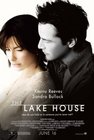
The Lake House

Keanu Reeves and Sandra Bullock – and not an out-of-control bus to be seen.

Over ten years has passed since Speed - surely one of the more enjoyable action flicks of the 90s despite Billy Idol’s theme song – cemented Keanu Reeves as every teenage girl’s pin-up dream, and launched Sandra Bullock into the Hollywood-sphere. Reeves made one of the two wisest decisions he’s ever made* in refusing to appear in the abominable sequel Speed 2; so The Lake House marks his onscreen reunion with Bullock. And what a pleasing little romance this is: pairing Reeves’ scruffy appeal and Bullock’s sweet vulnerability - with a time travel twist.

Bullock plays Kate, a lonely doctor, who moves out of the beautiful titular Lake House to be closer to her hospital job in Chicago. Her notes for the next tenant wind up in the hands of Alex Wyler (Reeves), an architect who’s moving into the Lake House – which his father had built – to do it up. Something’s amiss here, and we soon work out that Alex is living in 2004, and Kate in 2006. Using the Lake House’s letterbox – and a scene-stealing dog - as their conduits, the pair embark on one hell of a long-distance relationship.

Romantic comedies need a twist these days to stand out from the bunch – but even so, the quantum mechanics of this particular film would have Einstein himself reaching for the calculator.** The couple is supposed to communicate through the Lake House letterbox, but the filmmakers drop that as a imperative about halfway through the film, and the two narrate their notes and letters as if having a real-time conversation. It’s best, I think, to ignore the minutiae of the time travel and resulting plot holes – or should that be black holes?***

Both Reeves and Bullock perform well here – the roles suit them and it’s a pleasure to see a romance involving two 40-something contemporaries instead of the typical Hollywood pairing (she’s hot bodied; he’s virtually stone cold). The time travel exterior is an allegory for deeper issues to do with time - waiting and commitment. Kate is dedicated to her job at the expense of her personal happiness; Alex is uneasy about following his heart and setting up his own company; and Alex’s architect father Simon (Christopher Plummer) reflects on his lifelong deficiencies as a father. It contains some nice imagery – the city of Chicago is an elegant backdrop, the Lake House is stunning, and there’s some almost poetic use of colour (especially red).

The Lake House will please those members of the audience savvy enough to either make sense of the time differences, or wise enough to ignore them completely. If nothing else…it passes the time.

*The other was taking the lead role in The Matrix. The two sequels, however…
**Hey! My first physics joke!
***Hey! My second physics joke!

Tuesday, July 18, 2006

Equus

In the interest of truth, I will state upfront that I am a member of the Brisbane Arts Theatre, have performed in numerous shows there over the past seven years, and my partner is also the director of Equus, the theatre’s latest production. Readers may therefore consider the following review biased; I can only encourage those readers (and everyone else) to venture out to Equus, and make up their own mind. Feel free to leave comments!

As a member of the Brisbane Arts Theatre, I can unequivocally say that Equus is the most daring production to be staged so far in 2006; and probably for several years before that. It’s an intense psychological character study; more therapy than theatre, and it’s a brave move for a community theatre best known for its mainstream fare of drawing-room dramas, murder mysteries, historical costume pieces and gentle comedies. The risk has paid off: this production of Equus is of a standard comparable to a professional theatre company, and is a credit to the cast and crew, and the theatre itself.

Equus was written by English dramatist Peter Shaffer over 30 years ago. It ran for over 1000 performances on Broadway, and won Shaffer the 1975 Tony Award for Best Play. In 1977 it was made into a film, starring Richard Burton as Martin Dysart, one of the main characters and the narrator of sorts. The play tells the story of Alan Strang, a 17-year-old boy sent to the psychiatrist Dysart for treatment after he blinds six horses with a metal spike. Strang, as we discover, is a horse-lover, so much so he constructs his own religion around the horse-god Equus. As Dysart explores Strang’s fragile psyche and what drove him to commit such a terrible crime against animals he ostensibly loves, he learns more about himself, and whether “sane” is a better way to live than “crazy” after all.

Peter Norton turns in a staggering performance as Alan Strang. He exposes himself both figuratively and literally, as the role involves a mental breakdown and full frontal nudity. John Boyce is more than his equal as Martin Dysart, the psychiatrist whose life has turned out far different than he expected. Their dynamic performances hold the play together – indeed, like his subsequent play Amadeus, Shaffer likes to focus on the sparring between two lead characters. Stand-put supporting performances come from James Fitzgerald and Joy McLeary as Alan’s bewildered parents Frank and Dora, and Celia Finter as Jill, the temptation that leads Alan from his own path of righteousness. Special mention must also be made to the four actors playing the horses (led by Shaun King as Nugget), in stunning silver-sculptered see-through horse heads, and 20-centimetre high “hooves” (built by Graham Mackenzie).

The stage is kept simple, with an enclosed set decorated only by the horse heads, which hang as watchful sentries when not being worn by the actors. Having all the actors stay onstage during the entire performance is an effective way of keeping scene changes short and the story moving, even though at times their natural movements (coughing, drinking water etc) are distracting. Lighting cues are for the most part clean and timely, and the few sound cues there are work well to enhance the action. Director Greg Rowbotham and assistant director Reneé Daly deserve credit for creating a simple yet dynamic vision; the story deals with almost supernatural elements without forgetting the harsh realities of a life affected by mental instability.

Equus deals with intense issues of identity, religion, illness, violence and sexuality. As mentioned above, it includes full frontal nudity, as well as simulated sex and mature language. It’s certainly not one for the kiddies, but if you like to be challenged by theatre, I heartily recommend it. It’s one of the best shows the Arts Theatre has produced in recent years, and I can only hope they keep a place in their schedule for intelligent, engrossing drama. The audience deserves that choice.

Equus
Brisbane Arts Theatre
Runs until July 29
Thurs, Fri, Sat nights @ 8pm
Sunday matinee 23rd July @ 2pmWednesday night 26 July@ 8pm
Tickets $22 adults/$18 concessionsBookings: 3369 2344
www.artstheatre.com.au

Thursday, July 13, 2006

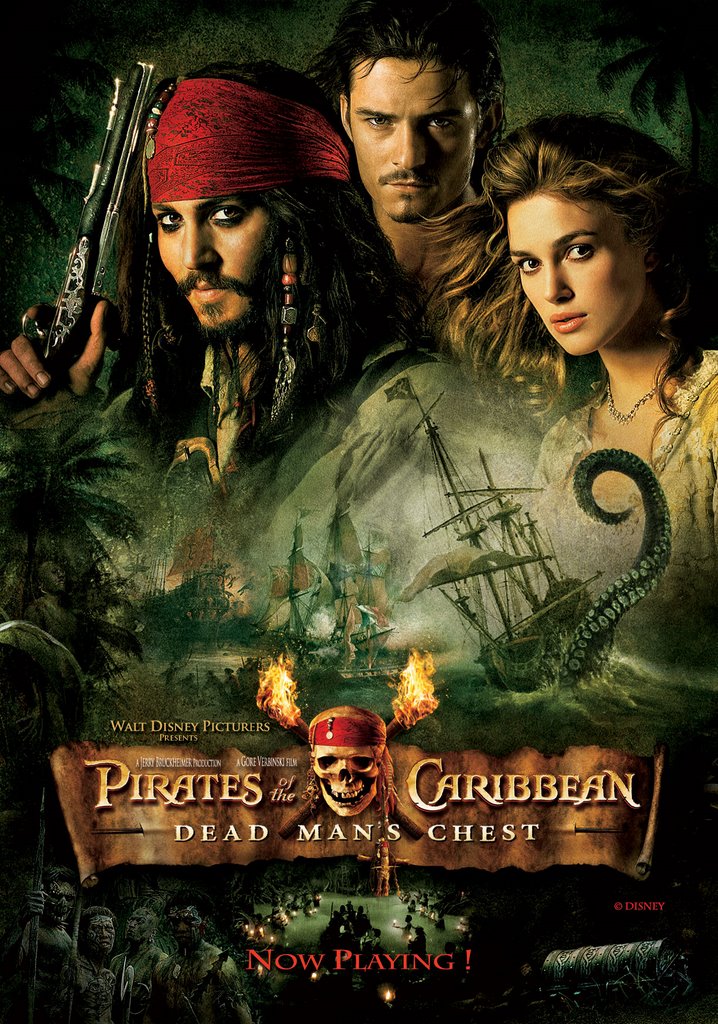
Pirates of the Caribbean: Dead Man's Chest

It’s been three years since the first Pirates movie burst onto our screens, buckling its swash with gay abandon, launching the international career of Keira “I need a sandwich” Knightley, and introducing one of the greatest ever screen characters – Captain Jack Sparrow. In a deservedly Oscar-nominated performance, Johnny Depp fired up the imaginations of teenage girls and everyone else alike, inspiring in all who saw it a desire to throw off their corporate chains, escape to the sea and spend the rest of their lives drinking rum to the tune of “Yo-ho, yo-ho, a pirate’s life for me”.

With its incredible box office success, not to mention the acting credibility lent to it by the likes of Depp, and Geoffrey Rush as the villainous Captain Barbossa, it was inevitable the film would become a franchise. Thus we have Dead Man’s Chest, a spirited, if overly complicated movie, that acts as both sequel to Curse of the Black Pearl, and set-up for the grand finale, At World’s End, due out late 2007 (principle shooting on both films was done on location in the Caribbean at the same time).

It’s not a bad idea to re-watch Curse of the Black Pearl, so you’re up to pirate speed by the time Dead Man’s Chest begins. The film launches straight into the action, picking up where COTBP left off. What’s supposed to be a happy wedding day for Elizabeth (Knightley) and Will Turner (Orlando Bloom) soon takes a dramatic turn, when both are arrested and charged with helping Captain Jack escape justice. To win their freedom, Will agrees to track down Captain Jack for the new commander of Port Royal and poster boy for the East India Trading Company Cutler Beckett (Tom Hollander). Elizabeth also manages to break out, stealing pardons for Jack and Will and agreeing with Beckett’s request to find Captain Jack’s mysterious and magical compass.

Meanwhile Captain Jack has problems of his own. The cephalopodic Davy Jones (Bill Nighy) has returned to claim a debt Jack owes him – his soul. Jack and his crew make an escape to land, and after a run-in with the somewhat stereotypical natives (painted bodies, manic dancing, threats to boil Jack and eat him), tricks Will into taking his place on Jones’ ghoulish ship, The Flying Dutchman. There’s high-sea hijinks ahoy as Jack proceeds to double cross everyone in his quest to get a hold of Davy Jones’ heart, which lies in the eponymous Dead Man’s Chest, and is the key to controlling the oceans.

What weighs Dead Man’s Chest down is this bulky and convoluted series of plots, which are hard to follow if one loses interest even for a few seconds. The intertwining storylines all have to be dealt with, which results in the film being about half an hour too long. And yet there’s many questions never answered, and many characters short-changed – most notably Knightley, whose feisty aristocrat from the first film appears to have morphed into a pouty brat; her longing for freedom exchanged for her longing to get married. The movie’s fumbled attempts at setting up a love triangle of sorts between Elizabeth, Will and Captain Jack are also frustrating. I certainly hope they don’t trot out the “Captain Jack is saved by the love of a good woman” tripe in the third film. What makes Captain Jack so much fun to watch is his complete disregard for humans – even ones he likes – if it’s in his own self-interest and preservation. I’m sorry, but Keira Knightley just isn’t good enough to change that!

The film’s highlights are its visually interesting cast, stunning scenery, a few spectacular fight scenes and superb uses of CGI special effects. Davy Jones’ octopus beard is beautifully animated, although it’s a shame to lose so much of Bill Nighy’s wonderfully craggy face (although the man can do more with his eyes than Bloom can do with his whole face). His crew are a frightening mix of man-beasts, their heads having turned into various sea creatures such as hammerhead sharks and lobsters. The Kraken, a giant squid Jones calls from the deep to do his bidding (which mostly involves tearing ships apart plank by plank), is so real, you can see the water dripping off the suckers on its massive tentacles. A tri-cornered sword fight between Jack, Will and Norrington (Jack Davenport in a nice turn) is very well executed, even if does include a somewhat ridiculous joust atop a spinning mill wheel.

This movie includes references to the Disneyland ride on which it was based – most particularly a longboat ride through a creepy bayou to the house of a local mystic. The film ends here; with the gang gathered to pledge their support for yet another adventure, this time to rescue a beloved character, with the help of an old foe. It’s an understandable but unsatisfying ending, and makes it all the more obvious how much of a bridging film this is.

The star of the whole kit and caboodle is however, Depp, and his importance should not be underestimated. Though not quite as joyous as his first turn as Captain Jack (unsurprisingly as that was as much of a journey of discovery for Depp as it was for those of us watching), he still remains the lynchpin for the movie’s success. People would come to see two hours of Depp regardless of who else turned up on the day of filming. His macho posing is beautifully undercut by his cowardice and effeteness, and it’s easy to get lost in his kohl-lined eyes. (Sigh!)

Pirates of the Caribbean: Dead Man’s Chest is a rollicking, jollicking romp of a film – it’s about pirates, for goodness’ sake. It might be a bit much for very young kiddies, but otherwise it’s a fun few hours to spend away from the office, out on the high seas, singing “Yo-ho, yo-ho, a pirate’s life for me”.

Tuesday, July 11, 2006

Superman Returns

Slick, dark and edgy takes on much-loved comic characters have become de-rigeur over the past decade or so. It began essentially with the Tim Burton Batman films, moved on to the Sam Raimi Spiderman films, continued with the Bryan Singer X-Men films, faltered a bit with Ang Lee’s Hulk* and reached a pinnacle with last year’s Batman Begins, directed by Christopher Nolan. In films like these, brightly-coloured spandex outfits were abandoned in favour of leather and rubber, and backstories were vital to fleshing out the superhero characters. You couldn’t just be a good guy - you had to have a tragic childhood/adolescence, intimacy issues, and sado/masochistic tendencies – and be good in spite of all that.

But that approach simply wouldn’t work with Superman. Superman is Superman. He’s the ultimate good guy. There are no shades of grey - he’s black and white all the way.
The aforementioned Bryan Singer (who ditched X-Men: The Last Stand to take up the directing reigns here) therefore opts to avoid altering the character of the most super of superheroes. It’s simultaneously the best and worst thing about Superman Returns.

Superman Returns is a superhero movie that retains a sense of innocence and childlike wonder – as if Singer was directing through the eyes of the wide-eyed comic-reading ten-year-old inside him. But the character of Superman is just not as engaging as his others in the DC universe – and for this reviewer, there isn’t enough of his more human alter-ego Clark Kent to make up for it.

Ostensibly taking place after events in 1980’s Superman II (starring Christopher Reeve), Superman Returns sees the eponymous character (played by newcomer Brandon Routh) return to Earth after five years in the wild space frontier, searching in vain for any remains of his home planet Krypton. He crash lands back in the Kansas farm he grew up in, with Ma Kent (a nice cameo from Eva Marie Saint) on hand to nurse him back to health. Back he goes to Metropolis, to his old life as Clark Kent, newspaper reporter for the Daily Planet. The gang’s all still there – sharp-tongued editor Perry White (Frank Langella); gawky photographer Jimmy Olsen (Sam Huntington); and of course, ace reporter extraordinaire Lois Lane (Kate Bosworth) – but things aren’t exactly the same. With Superman gone, the world, it seems, has moved on – and so has Lois, writing a Pulitzer Prize winning article entitled “Why the World Doesn’t Need Superman”, and more importantly, shacking up with White’s nephew Richard (James Marsden), and popping out a sprog (Tristan Lake Leabu as Jason). It seems winning the public over again will be easier than getting on Lois’ good side.

Also making a return from an exile - albeit of a different kind - is criminal mastermind Lex Luthor (a scene-stealing Kevin Spacey). Out of prison, and newly rich (thanks to a conveniently dead wife), Luthor tracks down Superman’s Fortress of Solitude (complete with projected images of Marlon Brando as Superman’s dad Jor-El), and learns the art of “crystal technology” – the method of building anything and everything on long-dead Krypton. Luthor hatches a plan to rearrange the world’s continental real estate, and has no intention of the letting the recently returned Superman stop him.

The film takes its time with the story – Singer is a master at pacing, and while it’s over two hours long, it always holds your attention. This skill comes especially in handy considering the plot holes the size of the yellow sun that Singer must contend with (nobody notices Superman arrives back at the same time as Clark, after being away for the same length of time?). It’s cinematic sleight-of-hand at its best.

I had no problem with Brandon Routh as Superman – he looks eerily like Christopher Reeve from certain angles, and his inexperience onscreen is well disguised by the fact that Superman’s all-round goodness makes him a bit wooden to begin with. I preferred his turn as the clumsy Clark Kent, all wide eyes, awkward smiles and sneaky runs to the elevator when a quick change is required. Kate Bosworth is a little more problematic – there’s no doubt she held her own, but she just looks too damn young to be a reporter as experienced as Lois Lane, with a top job and a Pulitzer under her belt – not to mention a relationship with Superman going back over five years and now a four-year-old son running about. Obviously she matches age-wise with Routh, but at certain points I wished the casting directors had hired leads 5 or 10 years older.

The supporting players at the Daily Planet are all competent (especially Huntington as Jimmy Olsen); but the real star of the show is Kevin Spacey as Lex Luthor. Spacey plays on the fact that while we all wish we had the power and goodness of Superman, we’d settle for Luthor’s style and panache. Spacey’s timing and delivery are exemplary – while many comic die-hards will no doubt decry the continuing morphing of Luthor from insane scientist to Dr Evil-style megalomaniac (complete with white suit and bald noggin), most will enjoy such energetic opposition to the titular hero. Parker Posey also turns in a fun performance as Luthor’s moll, Kitty Kowalski.

The special effects reflect the movie’s big budget – although the site of a plummeting 747 didn’t turn me off flying as much as I thought it would. The new land built by Luthor using his stolen crystals is impressive, but it’s hard to believe the soulless rocky outcrops would attract a high bidding among land-hungry estate agents.

Superman Returns is an old-fashioned superhero movie, with a clear line between “good” and “bad”. The only complexities come from Lois’ relationship with Superman, and current partner Richard, and they’re interesting enough to watch, even a bit creepy at times (Superman hovering above Lois’ home, listening in to her and Richard’s kitchen talk). As mentioned above, the film suffers in my opinion because of a lack of Clark Kent, but then the movie is titled Superman Returns not Clark Kent Returns. But it’s got action and adventure for the kids, a bit of romance for the romantics, and in-jokes and comic references for the geeks. And surely that must be good enough.

*we don’t mention 2003’s Daredevil, or its 2005 spin-off Elektra.

Friday, June 30, 2006

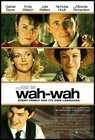
Wah-Wah

Richard E. Grant is one of those charming actors who makes everyone and everything around him look good. Who could forget his exuberant performance as Withnail in 1987’s cult classic Withnail & I ? (“I must have some booze!”) At the other end of the scale, he was quite possibly the best thing in 1997’s Spiceworld, as the now-defunct girl band’s manager. So I was interested to see if his infectious talent would spread to Wah-Wah, his first outing as a writer/director – and I’m pleased to report it certainly does.

Based on his own childhood experiences, Wah-Wah is set in the south-west African nation of Swaziland, as it approaches independence from its colonial mistress Great Britain at the end of the 1960s. The film opens with young protagonist (and Grant’s alter-ego) Ralph Compton witnessing his mother’s adultery, and goes on to show the devastating alcoholism that grips his father in her wake. The film also follows several other characters within the small expatriate community the Comptons inhabit, where the British stiff upper lip fails to completely hide the heated passions and cloying hypocrisy.

Zachary Fox and Nicholas Hoult play Ralph at 12 and 15 years respectively, and both do a fine job. Discovering your parents aren’t infallible is a journey every child takes, and Ralph’s is a sweet one to watch. Both actors convincingly convey the devastating loss of Ralph’s mother, and the growing up he has to do to deal with his father. Ralph’s inner rage manifests in a puppet-like grimace, but as director Grant never lets the character sink into self-pity.

Gabriel Byrne gives a stellar performance as Ralph’s father Harry, a top education official who’s all easygoing charm during the day, but turns into a beast once his begins his daily bottle of scotch. Some of his drunk scenes tend towards melodrama, but or the most part his portrayal of two men inside the one body is hauntingly real. Miranda Richardson as Ralph’s selfish but desperate mother Lauren is marvelous – but then she very rarely puts a foot wrong, especially in character pieces like this. Julie Walters also gives a delightful performance as Gwen, who finds herself having to start all over again when her husband dumps her.

But the star is Emily Watson as Ruby, an American flight attendant that Harry meets and marries in six weeks. It’s a cliché, but she really is a breath of fresh air compared to the staid British ex-pats. It’s Ruby who coins the phrase “wah-wah”, referring to the posh baby talk the Brits use to communicate (“hush-hush”, “hubbly-jubbly”, “toodle pip”). Watson plays her with just the right mix of bravado and sensitivity, and Ruby’s relationships with Harry and Ralph are truly touching.

The only disappointing aspect of Wah-Wah is its forgettable soundtrack, but it’s a minor quibble. It’s a credit to Grant that he got his story to screen in the first place (especially if you read some of the incredible hassles he outlines in his latest book, The Wah-Wah Diaries), and even more so that he managed to do so in such a touching and believable way.

Wednesday, June 21, 2006

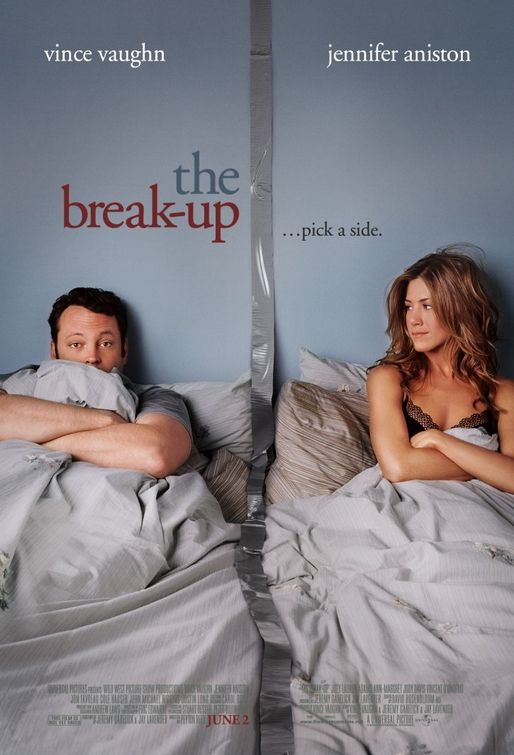
The Break-Up

Important disclaimer re: The Break-Up : This movie is not a romantic comedy. Do not let any of the marketing convince you otherwise. You will only end up feeling awkward because you were expecting some sort of hilarious hybrid of The Wedding Crashers and Friends. Do not see it if you're more interested in what Jennifer Aniston and Vince Vaughn are doing offscreen, rather than on. Do not take a first date to this film. Do not take your current partner to this film. In fact, don't go at all.

Well, OK, that's not entirely fair. The Break-Up is a half-decent attempt to realistically depict a relationship in its death-throes, managing to avoid for the most part feel-good-rom-com-required hints at reconcilation. It's also got half decent performances from its leads - even if they are largely stuck in the realm of cliches (she's a classy and caring modern woman; he's a selfish slob).

However, it's suffering from the same condition as Jennifer Aniston's character Brooke - a crisis of conscience. It doesn't really have the chutzpah to go all out as a serious relationship drama, preferring instead to throw in wacky comedic turns to justify the advertising campaign, which was obviously planned before the film itself was written.

The story begins with Brooke (Aniston) and Gary (Vaughn) meeting at a baseball match. We're not sure why they got together, but their relationship is documented in snapshots throughout the title sequence. After a brief explanation of what they do (she's an art dealer; he runs bus tours of Chicago), the film gets right into the argument that sees them break up. Trouble is, they've bought a snazzy condo together (Americans can't just have "flats", can they?) and neither wants to give up their half. What follows is territorial warfare, with hijinks and shenanigans from both sides - but it becomes apparent they're fighting for different reasons.

As mentioned earlier, the two leads turn in reasonable performances. Vaughn is set up early as "the bad guy", and plays his easy-going schtick well. His vehemence in some of the fight scenes is what really impresses though - in fact, some of those fights are so realistic, fought over petty things, often in front of friends, that you almost feel like you're watching people you know have a spat. Aniston is set up as "the good woman" - with the filmmakers attempting to get across the fact that sometimes you try to save a relationship simply because you love the person no matter what their flaws. This is supposed to make Aniston's character sympathetic to the audience, but unfortunately we just end up wondering what she saw in him in the first place and to just dump the slacker already.

The supporting cast is of stellar quality (including Vincent D'Onofrio, Jason Bateman and even a brief glimpse of Ann-Margret), but their roles are reduced to a series of incidental appearances ranging from the dull (Joey Lauren Adams as Brooke's helpful advice-giving best friend) to the unrealistic (John Michael Higgins as Brooke's metrosexual all-singing brother). The stand-out is Judy Davis as Brooke's self-obsessed boss - more worried about the effect Brooke's relationship woes has on her business than on Brooke herself.

The Break Up thankfully avoids too much of a cliched Hollywood ending; but ultimately its take on the male/female dynamic doesn't go much deeper than "Men are from Mars, Women are from Venus". It certainly is different to your average rom-com, but it's a shame it didn't have the intestinal fortitude to push the envelope further.

Saturday, June 17, 2006

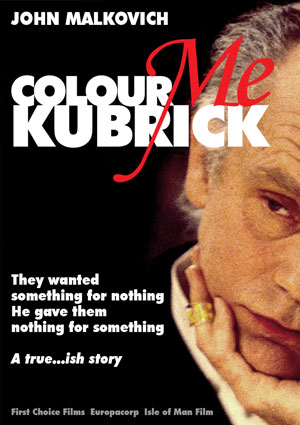
Colour Me Kubrick

Few film directors are as iconic as Stanley Kubrick. Perhaps only Alfred Hitchcock eclipses him in the instant-recognition stakes. But while a simple silhouette of Hitchcock's portly physique is enough to conjure up thoughts of James Stewart's wheelchair-bound voyerism, Cary Grant dodging bi-planes or Tippi Hedren being stalked by some wayward seagulls - it's Kubrick's name alone that brings to mind his innovative and confronting films. For Kubrick, especially in his later years, shunned the limelight - preferring to remain at his English country estate with his kids and pets rather than flashing his credentials all over Hollywood (take that George Lucas).

So with that in mind, in the late 90s, an English conman named Alan Conway began getting round London passing himself off as Stanley Kubrick. Colour Me Kubrick is the "true...ish" story of this man, and while it's in the "out there" category, it's a great little film with a marvellously indulgent performance by John Malkovich in the central role.

There's not much of a story to Colour Me Kubrick. The film is essentially a series of cons that Alan Conway/Stanley Kubrick pulls - some quick and mercenary, others drawn out and complicated. The film obviously embellishes Conway's story, but if he got away with merely half of what his screen counterpart does, it's breathtaking. Malkovich takes great delight in wallowing in the character of Conway/Kubrick - donning effeminate and eccentric clothing (who says paisley and plaid with terry cloth boxers, fingerless gloves and a headscarf doesn't work?) - and shuffling messily around town. He virtually smells unwashed. (They should have just called it "Being Stanley Kubrick", or "Being Alan Conway"). As Kubrick, Conway adopts different accents almost every time he meets someone new, as if his bold exterior and constant name-dropping will cover-up his lack of credibility and his surprisingly poor knowledge of Kubrick's life and work. The telling part is though, that it does.

Colour Me Kubrick offers a nice comment on the nature of celebrity, and just what we ordinary plebs will do to please someone we think is famous. We'd all like to think we're bullshit-proof, but blimey, we're not. While some of those conned in the film are idiots, most are just naive, with goals and dreams that Conway plays on (preys on?) to his advantage. So the wannabe fashion designer, the up-and-coming band, the chemist with a screenplay at home all fall victim. There, but for the Grace of God....well, you know the rest.

Aside from the huge presence of Malkovich, the film's strength is in its obvious reverence for the work of the real Stanley Kubrick. It's peppered with visual but more particularly musical references to his films - Conway taking his dirty clothes to the laundromat to the dum-dum-dum-dum of "Dawn" from Strauss' Zarathustra, or being thrown off a pier to the unsettling electronica featured in A Clockwork Orange. It also has a roll call of British actors in cameo roles - the stand-out being Richard E. Grant as a gushing bar owner. "Oh, Stanley!"

The history and motivation of Conway himself is not delved into in any real detail - like the mysterious monoliths in 2001: A Space Odyssey, he himself seems to appear out of nowhere. He's obviously a lonely and desperate man, but his final and biggest con proves he's not crazy.

This is definitely not a mainstream film, and may confuse some people. But it has its own charm, and devotees of either Kubrick or Malkovich will definitely get a kick out of it.